AI reliability engineering — regulated & high-stakes systems


Verifiable behaviour for production AI.

Tresonant designs, evaluates and hardens AI systems for organisations where a wrong answer has consequences — in finance, healthcare and the public sector.

deterministic pipelines · evaluation before deployment · audit-ready by design

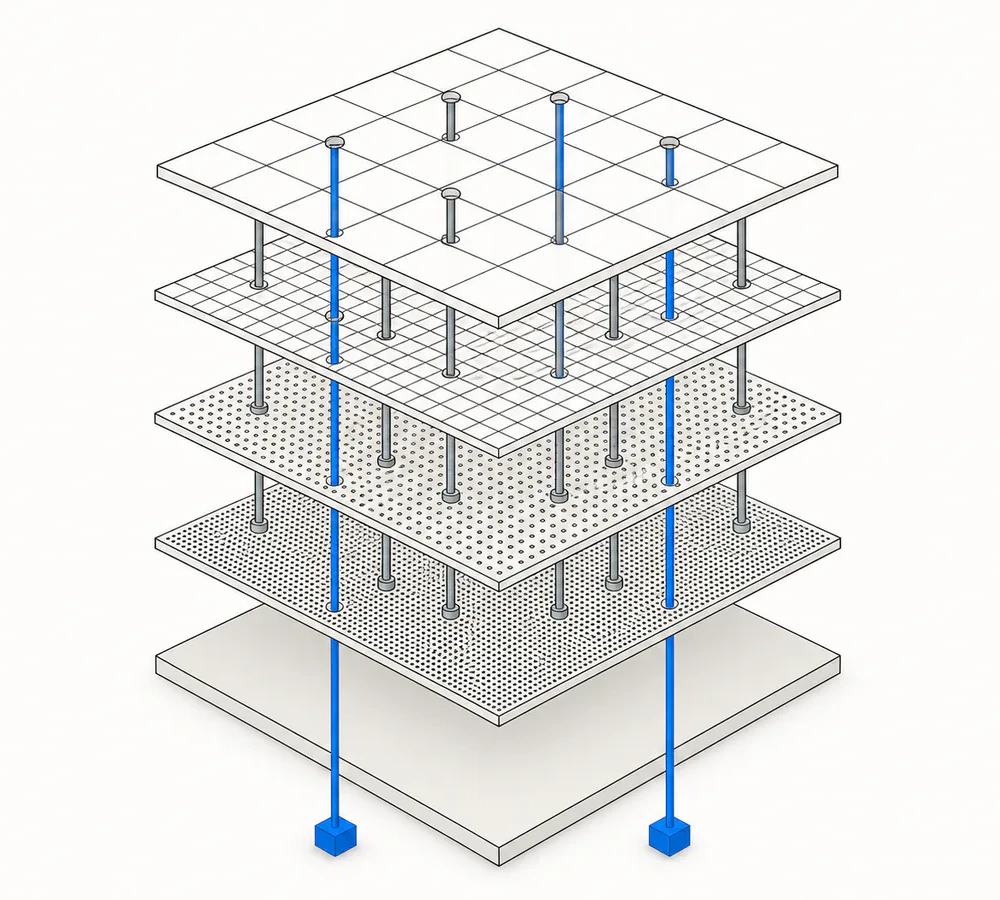
VERIFICATION LAYER IN.01 IN.02 IN.03 VERIFIED OUT T0 TN
Fig. 01 — Verification path (conceptual)
Deterministic Auditable Evaluated Constrained Human-accountable

01 / Capabilities


Three disciplines. One outcome: AI you can stand behind.

We work at the layer between a capable model and a system a regulator, a clinician or a risk committee will accept.

/01

AI reliability engineering

Deterministic pipeline design around probabilistic models: constrained outputs, typed interfaces, fallback paths and failure budgets — so system behaviour is specified, not hoped for.

Reliability engineering →
/02

Evaluation & guardrails

Behavioural test suites built from your policies and edge cases, run before and after every change. Guardrails enforce the boundary at runtime; evaluations prove it held.

Evaluation & guardrails →
/03

Deployment for regulated environments

Architecture and controls mapped to your obligations: audit trails on every decision, data-residency options, human-in-the-loop checkpoints and documentation your auditors can read.

Regulated deployment →

02 / Method


Every output passes through a gate it can fail.

Our reference architecture treats the model as one component in a controlled system — never as the system itself.

INPUT TYPED / VALIDATED POLICY GATE PRE-CONDITIONS MODEL CONSTRAINED CALL VERIFY POST-CONDITIONS OUT FAIL → REJECT / ESCALATE TO HUMAN AUDIT LOG — EVERY STAGE, EVERY DECISION
Fig. 02 — Tresonant reference pipeline
Working sequence

Specify. Evaluate. Constrain. Ship. Watch.

  • Specify — behaviour is written down first: what the system must do, must never do, and who is accountable when it is uncertain.
  • Evaluate — a test harness is built from that specification and your real edge cases, and becomes the permanent gate for every change.
  • Constrain — runtime guardrails enforce the specification on live traffic: schema checks, policy filters, bounded tool use, mandatory escalation paths.
  • Ship — deployment includes the evidence: evaluation results, control descriptions and audit-trail design, packaged for risk and compliance review.
  • Watch — production behaviour is logged, sampled and re-evaluated, so drift is detected by process rather than by incident.

03 / Engineering commitments


Design rules we hold ourselves to.

100%

of system decisions traceable to an audit record — by design, in every pipeline we build

0

undisclosed model or data sub-processors — you approve every component in the chain

review on every deployment gate — no single engineer ships a behaviour change alone

≤1

business day to respond to any technical briefing request

// Commitments of our working method — not benchmark claims or client statistics.

04 / Governance posture


Where we stand, stated plainly.

Tresonant was incorporated in 2026. We would rather show you an honest posture table than a wall of borrowed badges.

Control areaStatusNotes
Audit logging of AI decisions✓ Designed-inDefault in every reference pipeline; log schema shared with clients.
Evaluation before deployment✓ MandatoryNo behaviour change ships without passing its evaluation gate.
Human escalation paths✓ Designed-inUncertain or failed outputs route to named human owners.
Data residency options✓ SupportedUK/EU deployment patterns; client infrastructure where required.
UK GDPR alignment✓ OperatingSee our privacy policy for the full statement.
Third-party certification (e.g. ISO, SOC)— Not yetEarly-stage; we make no certification claims. Ask us about our roadmap.
Published client references— Not yetWe name no clients we do not have. Scenario work is labelled as such.

A model that cannot be audited is a liability wearing a demo. We build the audit first.

— Tresonant engineering charter, §1

05 / Questions


Asked early, answered plainly.

What exactly does Tresonant do?

We are an AI reliability engineering firm. We design the control systems around AI models — deterministic pipelines, evaluation harnesses, runtime guardrails and audit trails — so that organisations in regulated or high-stakes settings can deploy AI with evidence rather than optimism.

Are you a product company or a consultancy?

Today, an engineering specialist: we build and harden systems with a small number of partners, using a shared reference architecture and tooling we are developing in the process. Companion tooling — including enterprise monitoring applications — may follow; we will describe them precisely when they exist, not before.

Do you hold ISO or SOC certifications?

Not yet, and we will not imply otherwise. We were incorporated in 2026 and are early-stage. Our governance posture table above states exactly what is in place today; formal certification is on our roadmap and we are happy to discuss timelines in a briefing.

Which models and vendors do you work with?

We are model-agnostic by policy. The verification layer is designed so that the model behind it can be commercial, open-weight or your own fine-tune — and can be swapped when the evidence says it should be. Every component in the chain is disclosed to you and approved by you.

How does an engagement start?

With a technical briefing: a working session with our engineers, not a sales call. Email sales@tresonant.co with a sketch of your system and constraints; we reply within one business day. See the contact page for what to include.

06 / Next step


Bring us the system you don't fully trust yet.

A technical briefing is a working session with engineers: your architecture, your failure modes, our method. No slideware.

sales@tresonant.co — we reply within one business day.